
turismo ·
What is the weather like in the Triple Frontier by season, and what should you pack?
Marco Três newsroom · edited by Annie GrellmannUpdated on EspañolPortuguês
Summer, autumn, winter and spring in Foz, Puerto Iguazú and Ciudad del Este: what to expect and how to prepare
The Triple Frontier has a humid subtropical climate (Cfa type), with an annual average around 22°C (72°F) and four well-defined seasons. Summer (Dec-Mar) is hot, humid and rainy; winter (Jun-Sep) is mild and drier, with the chance of cold spells. Pack light clothing and sunscreen for the heat, and layered warm clothing for winter.
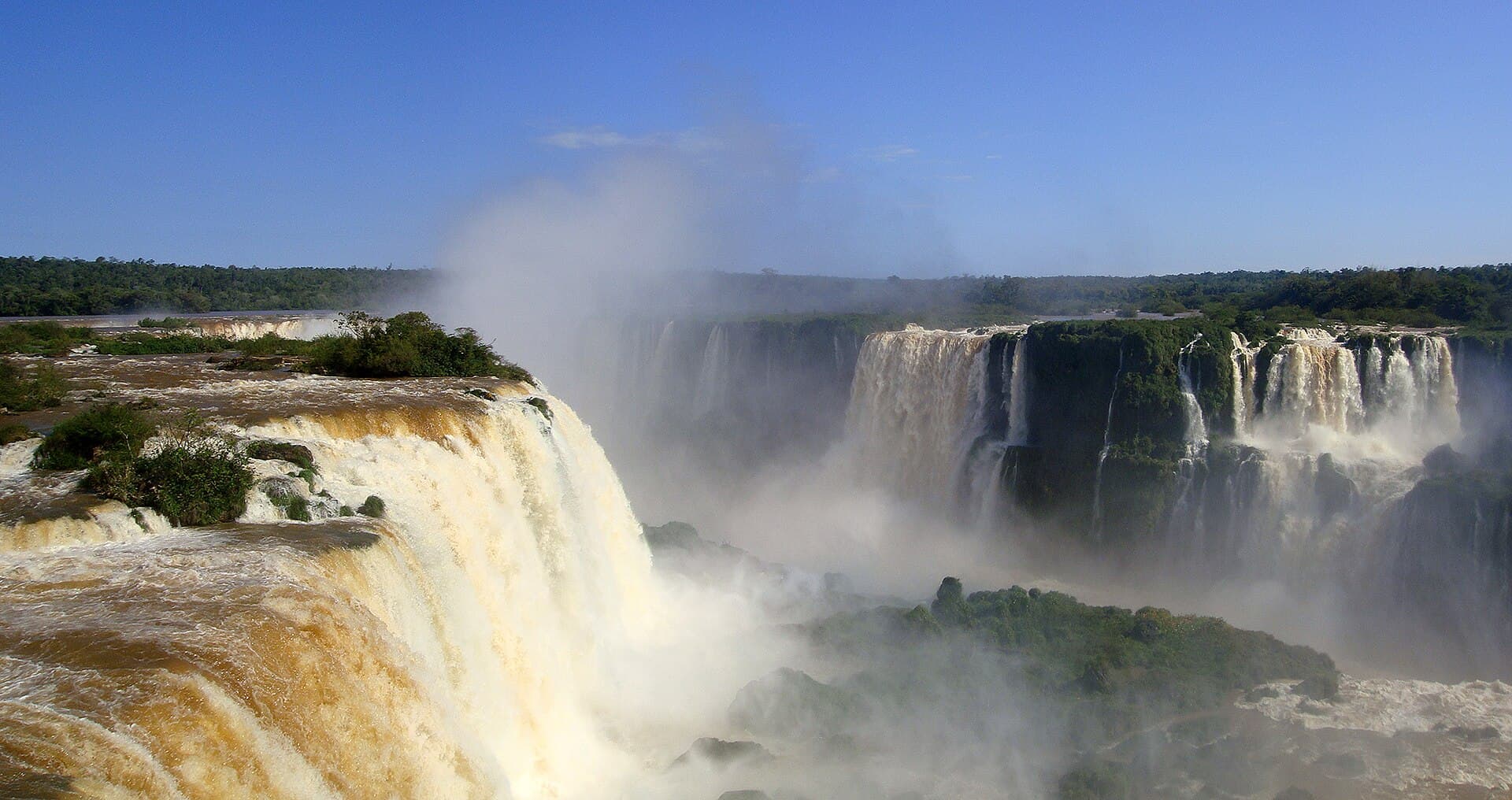
Quick answer: The Triple Frontier has a humid subtropical climate with an annual average of 22°C (72°F). Summer (December-March) brings heat around 30-31°C with heavy rains; pack light clothing, sunscreen, hat, and rain jacket. Autumn (March-June) offers 15-27°C with lower humidity; layer clothing. Winter (June-September) is coolest and driest at 13-22°C; bring a warm jacket. Rain falls year-round, so always check forecasts.
Quick answer
Foz do Iguaçu, Puerto Iguazú and Ciudad del Este share the same climate: humid subtropical (Köppen Cfa), with an annual average temperature around 22°C (72°F) and clearly marked seasons. Because this is the Southern Hemisphere, summer runs from December to March and winter from June to September. Rain is spread fairly evenly across the year (about 1,800 mm / 71 in annually), so showers can happen in any season: always check the forecast before heading out.
You can track temperature and rainfall live at /dados/clima on Marco Três (real-time data via Open-Meteo).
Monthly averages (30-year normals)
| Month | Min (°C) | Max (°C) | Rain (mm) |
|---|---|---|---|
| January | 23 | 31 | 165 |
| February | 22 | 30 | 155 |
| March | 21 | 29 | 145 |
| April | 19 | 27 | 139 |
| May | 15 | 23 | 162 |
| June | 14 | 22 | 139 |
| July | 13 | 22 | 118 |
| August | 15 | 24 | 93 |
| September | 17 | 26 | 158 |
| October | 19 | 28 | 211 |
| November | 20 | 29 | 161 |
| December | 22 | 30 | 180 |
Source for monthly normals: Climatempo (30-year climatological averages; annual total around 1,788 mm). Values vary year to year: check the current forecast before traveling.
Season by season
Summer (December to March)
- What to expect: heat and humidity, with highs around 30-31°C (86-88°F) and peaks that can top 35°C (95°F). It is the rainiest season: downpours tend to be heavy but brief, which makes it easy to reschedule outings. The river runs high and the Falls reach their greatest flow.
- What to pack: light, light-colored clothing, sunscreen, a hat or cap, plenty of water, insect repellent, and a thin rain jacket or compact umbrella.
Autumn (March to June)
- What to expect: relief from the heat and a more balanced climate, with temperatures generally between 15°C and 27°C (59-81°F). Humidity starts to drop and skies clear up: a good time for walks and sunsets.
- What to pack: layered clothing (a t-shirt plus a light jacket covers the morning/afternoon swing), and sunscreen for sunny days.
Winter (June to September)
- What to expect: the coolest and driest season of the year, with blue skies and excellent visibility. Lows hover around 12-13°C (54-55°F) but can drop below 10°C (50°F) during cold snaps. The city's record low reached -5°C (23°F) in July 1975 (per climatestotravel). Even so, afternoons are usually pleasant.
- What to pack: a real coat (jacket, warm sweater), a scarf, and something for cold mornings, in layers, since afternoons warm up. It is also one of the best windows to visit the Falls with little rain.
Spring (September to December)
- What to expect: gradual warming and the return of humidity, with temperatures between about 14°C and 31°C (57-88°F). October is the wettest month of the year (averaging 211 mm), so be ready for showers. The climate is considered ideal for tourism through much of the season.
- What to pack: mix light pieces with a thin jacket, plus sunscreen and a rain layer, the weather can change within the same day.
When to go
You can visit the region all year round by matching your plans to the forecast. Travelers who prioritize mild temperatures and less rain often prefer late autumn (April-June) and winter (July-September). Those who want to see the Falls at maximum water flow tend to enjoy summer, keeping in mind it is the hottest and rainiest season.
Trinational tip: the three cities sit just a few kilometers apart and have practically the same climate, what applies to Foz applies to Puerto Iguazú and Ciudad del Este. Before heading out, check the forecast and live data at /dados/clima.
Source: Foz do Iguaçu Municipal Tourism Office · monthly normals: Climatempo
Frequently asked questions
- What is the climate of the Triple Frontier?
- Humid subtropical (Cfa type), with an annual average around 22°C (72°F) and four well-defined seasons, according to Foz do Iguaçu's Tourism Office. Rain is spread across the whole year (about 1,800 mm), based on Climatempo's climatological normals.
- Is it cold in winter in Foz do Iguaçu?
- It is generally mild, with lows near 12-13°C (54-55°F), but it can drop below 10°C (50°F) during cold snaps. The record low reached -5°C (23°F) in July 1975 (per climatestotravel). Bring a real coat for the mornings.
- When is the best time to visit the Falls?
- You can go year-round. For mild temperatures and less rain, late autumn and winter (April to September) are great. To see the highest water flow, the rainy summer is the choice.
Still have questions? Ask the border
Marco Três's AI answers instantly, only from verified guides and live data, never made up.
Ask my own question →Read also
Live tools
Saiba de tudo antes de todo mundo
Câmbio, clima e o que importa nos três países, no seu e-mail, todo dia. Gratuito, sem spam.
✓ Marco Três fact-check
Content verified by the newsroom based on an official source: Secretaria Municipal de Turismo de Foz do Iguaçu (Destino do Mundo). Last checked: 6/14/2026. Found something inaccurate? We fix it fast. How we work.
Spotted something wrong? Tell us.
AI-automated curation with editorial supervision, your correction or suggestion helps keep things right.