
turismo ·
Claravis Institute: The Bird That Changed Conservation at the Park
Marco Três newsroom · edited by Annie GrellmannPortuguêsEspañol
Disappearance of the mirror-pararu inspired the creation of an organization dedicated to protecting Brazilian species
The loss of the mirror-pararu in the Foz do Iguaçu region of Brazil prompted Parque das Aves to rethink its role and, in 2020, create the Claravis Institute, a nonprofit focused on collaborative conservation of threatened Atlantic Forest species. The small bird, locally extinct in Paraná since the 1980s, sparked an institutional transformation that links researchers, public agencies, and specialists around preventive biodiversity-protection strategies.
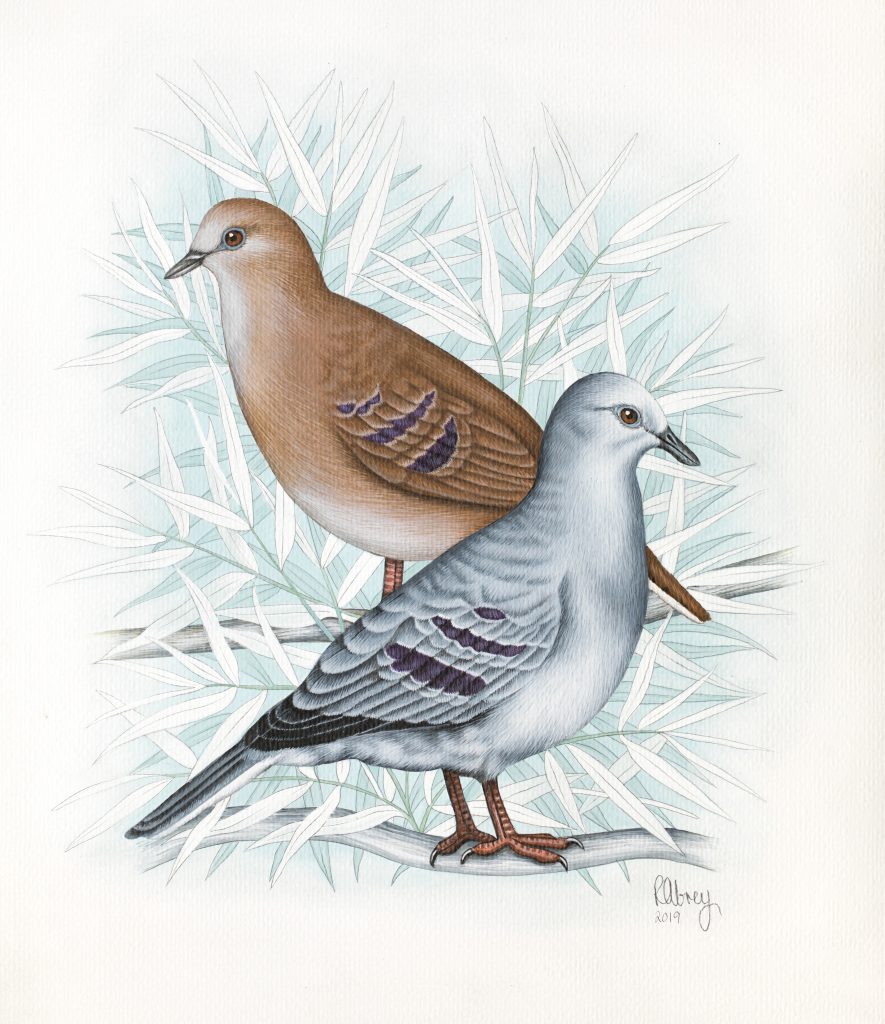
The mirror-pararu and its role in the Park’s history
The mirror-pararu (Paraclaravis geoffroyi) is a small bird endemic to the Atlantic Forest, specialized in eating bamboo seeds. Its common name refers to the metallic sheen of its wings. In the Foz do Iguaçu area the species vanished, and later searches in Iguaçu National Park, Brazil, also failed to record it. In Paraná it is considered regionally extinct—there are no documented records (photos, videos, specimens) confirming its presence in the wild after the 1980s, although anecdotal reports exist. Nationally, it is classified as critically endangered, possibly extinct.
Shift in focus at Parque das Aves
The species’ disappearance prompted internal reflection on how to broaden protection efforts. Starting in 2017, the Park concentrated its conservation work on Atlantic Forest birds, especially threatened species that need specific actions to reduce extinction risk. The institution adopted a preventive approach, identifying threats and developing strategies before populations reach critical levels.
Claravis Institute: structure and mission
In 2020, Parque das Aves founded the Claravis Institute to carry out and accelerate conservation actions. The name retains a direct link to the mirror-pararu—its former scientific name was Claravis geoffroyi—preserving the bird’s story in the organization’s identity.
The organization operates through three units: one dedicated to Atlantic Forest bird conservation; another focused on the survival of Brazilian species (CSE Brazil); and a third supporting wildlife, developed in partnership with the Government of the State of Paraná.
Conservation as collaborative work
Protecting a species involves researchers, public agencies, universities, civil-society organizations, zoos, and conservation centers. This collaboration allows the gathering of population data, identification of threats, setting of priorities, planning of strategies, and implementation of actions. The Claravis Institute seeks to connect technical knowledge, planning, institutions, and professionals to strengthen initiatives that protect Brazil’s biodiversity.
Source: Parque das Aves https://www.parquedasaves.com.br/blog/instituto-claravis-parque-das-aves
Frequently asked questions
- What is the conservation status of the mirror-parrot?
- The mirror-parrot is classified nationally as Critically Endangered, possibly extinct. In Paraná it is considered regionally extinct—no documented records confirm its presence in the wild after the 1980s.
- Why was the name Claravis Institute chosen?
- The name preserves the history of the mirror-parrot that inspired Bird Park’s transformation. The bird was scientifically classified as Claravis geoffroyi (its current scientific name is Paraclaravis geoffroyi), and the organization keeps that link in its identity.
- How is the Claravis Institute structured?
- The institute operates through three centers: one for Atlantic Forest bird conservation, another for the survival of Brazilian species (CSE Brazil), and a third supporting wildlife, developed in partnership with the Government of the State of Paraná.
Still have questions? Ask the border
Marco Três's AI answers instantly, only from verified guides and live data, never made up.
Ask my own question →Read also
Live tools
Saiba de tudo antes de todo mundo
Câmbio, clima e o que importa nos três países, no seu e-mail, todo dia. Gratuito, sem spam.
✓ Marco Três fact-check
Content verified by the newsroom based on an official source: Parque das Aves. Last checked: 10/1/2026. Found something inaccurate? We fix it fast. How we work.
Spotted something wrong? Tell us.
AI-automated curation with editorial supervision, your correction or suggestion helps keep things right.